
Come le visite a domicilio aiutano Ikea a creare una vita migliore a casa

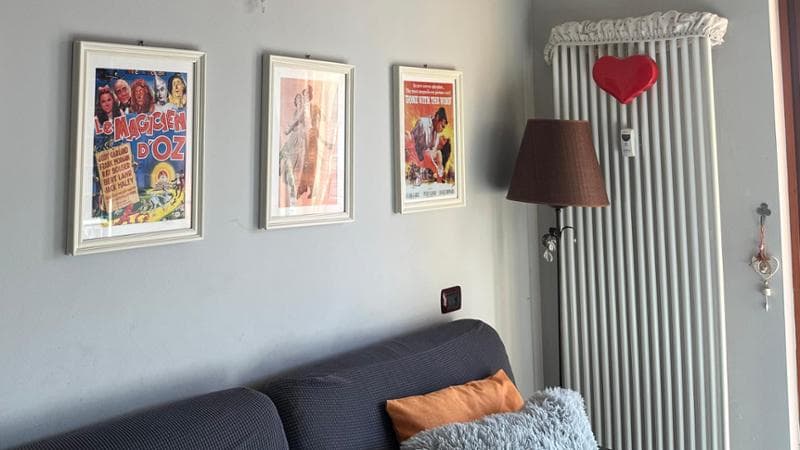
A corner of Eleonora’s living room: on the walls, some posters highlight the family’s passion for cinema in Milan, interviewed by Ikea
Giving quality to quantity. This is the strength of the report Life at Home by Ikea, which for the past ten years has served as a reliable observatory on living trends. Each year, the Swedish giant analyzes thousands of data points collected by market research firms and data analysts, complementing these significant, albeit “cold,” figures with the direct experience of entering people’s homes to truly understand how they live. The two approaches (data analysis and interviews) complement each other, resulting in one of the most authoritative research projects on living worldwide. Only in this way can we grasp desires and needs that “cannot be understood by looking from the outside like a tourist with a camera around their neck: it is necessary to learn by participating with the heart”. These words belong to Ingvar Kamprad, the brand’s founder, who was the first to recognize that this was the right path to understand the real needs of people and study solutions that can genuinely enhance life. Consequently, the role of consumers has completely transformed: from passive observers to active participants in the company’s production activities, as their needs are what shapes the product offerings that define today’s and tomorrow’s living.
Year after year, Ikea’s efforts have intensified. It has evolved from interviewing 40 families in Gothenburg in the mid-seventies, when the brand sought to understand why sales of living room furniture were declining (which effectively sparked the idea of home visits), to a representative sample of 37,428 individuals across 38 different countries in 2023.
We had the opportunity to see how the Ikea Italy team operates during an interview conducted in a warm apartment in the southern outskirts of Milan. Eleonora, married with a 9-year-old son, welcomes us. The conversation begins by exploring the meaning of well-being at home. “For me, it’s about having the right spaces to move and keeping the areas neat and organized,” she responds. Her mantra is “ensuring that every area is utilized and that everything has its place; this means tranquility and hospitality for those who live in the house every day and for the guests we host.” Indeed, the apartment is designed for sharing. The living area is the most vibrant space, accommodating various activities: from leisure, including playing with her son, to work with the sofa and table serving as the heart of all actions. The kitchen also signifies joy: “For my husband, it’s a pleasure to cook as well as to tend to a few plants on the balcony and in the community garden he has rented and utilizes from spring to autumn,” she adds.

It opens onto the living room, where Eleonora has taken a bold approach with color: “I love the energy of red. Unable to change the furniture, I decided to paint the walls in this striking shade to define the area and give the feeling of being in a separate room.”
The walls continue to be a focal point for sharing memories and passions such as music, dance, and cinema. The personalization of certain furnishings also adds more character to the space.

Currently, technology has made a subtle entrance: “We have a voice assistant that my husband uses to manage things like lights and music. I don’t believe that its presence brings an improvement or that it is necessary compared to years ago,” she states. Finally, discussing challenges, the open floor plan does not fully convince the family: “I would prefer to have a separate kitchen to create a greater sense of order and to prevent odors from spreading. Additionally, I would like a larger hallway at the entrance for better management of shoes and coats.” The rise of remote working has also added a desire for Eleonora for another room.
